What's In A Name? - Steven Heller
Heller makes a compelling argument for the use of real names in blogging and blog-commenting. It's often the case that one who uses a pseudonym feels more free to make comments they would otherwise temper if their identity were known. The blogosphere has allowed the masses to express their opinions and interests in rather highly public forms and the comment sections of blog post allow the same freedom for a blog's readers. Yet, as Heller point out, how trustworthy is a blogger or commentator when they hide behind a handle versus their own name. For whistleblowers or those who might otherwise put them and their families at risk by exposing their name, a pseudonym is understandable. But the vast majority of bloggers and blog-readers do not run such a risk. The only risk they run is having less than politel comments associated with their names and reputations.
This issue of pseudonym versus real name has gone beyond the message boards where flame wars, trolls and other kinds of rabblerousing exists. Many bloggers desire the same reputability as other journalists and thus want to make their blogs as accurate and open to criticism as possible. Even so, criticism that comes without attribution is less valuable than criticism that someone is willing to put their name behind. For a lot of critics, particularly of the troll variety, the pseudonym is a way of saying things without consideration or thought, without care for the veracity of their comments and without concern for lively and productive debate. They often do not play the role of devil's advocate or add anything of real value to the conversation. And when called upon it, many bloggers and commentors launch the accusation of 'fascist' to those who dare question their versimilitude. The existence of "Godwin's Law" since the mid-1990s is proof of the continuing existence of trolls and other commentors who would rather derail a conversation and focus on themselves than engage in a real debate.
The idea of requiring commentors and bloggers to use their real names is not meant to stifle conversation but to keep it civil. Let the pundits on tv embarass themselves with stupid and inane commentary. We the masses deserve better and one way to receive better is to call for an end of pseudonym usage in the blogosphere.
Saturday, December 29, 2007
CB Handles

Orb Reporting
Without Correspondents In Pakistan, TV Networks Rely on Producers and Part-Timers - NYT Blog
I've heard for several years now on the problem of U.S. global media coverage and the downsizing or outright closing of foreign offices. This was first noticed after 9/11 when correspondents were sent to all sorts of places almost at random since no media organization had a clear idea of where the next media event would happen. With the assassination of Benazir Bhutto, it was only ABC and CNN who were among the U.S. media companies on location when the assassination happened. Every other news organization had to rely on freelance correspondents or simple wire reports. The BBC does maintain a large global operation but for Americans this doesn't really help the situation any. When I first heard of the assassination I immediately when to the Washington Post, the NY Times, the BBC and the Guardian Online (another British, leftist paper) and got a series of conflicting reports. Some of the basic information was the same while others differed significantly, particularly on the matter of whether it was a single sniper/suicide bomber or two men operating in tandem. This kind of confusion of reporting is unsurprising now since out of the four only the BBC had a correspondent on hand in Pakistan.
With the constant questioning of media bias, the issue of global coverage is essential when events in other nations can have a serious impact on our national and economic security. Yes, we can read local papers but often we have less of an idea of their biases than we do of our own media organizations. When and how information is presented plays an critical role in how the narrative of an event is crafted. For those who rely on only one or two sources of news, one can see how the lack of on-scene global coverage becomes a problem. Who is doing the writing, the editing and the presentation (anchor or correspondent) are questions left unanswered and are difficult to answer.
This age of globalized information requires a constant skepticism of whether the reporting is accurate or whether a spin has been placed on the event. The use of multiple news sources does mitigate this problem but only slightly so when those multiple sources rely on wire reports or a single nexus of information. So let this post be a reminder to always seek alternative sources of information, to check the biases of the reporting and to always question how the reporting is presented.
Monday, December 24, 2007
The Gold Standard
Dollar's Fall is Felt Around the Globe - Anthony Faiola @ WaPo
The dramatic rise in precious metals in recent years is another element often overlooked with the weakening dollar. Three years ago gold was holding steady (as it had for the past decade) at around $400 per troy ounce with platinum following suit at $700 an ounce. But today's prices continue to astound me. Not since the early 80s has gold been priced so high ($800 a troy ounce and platinum at nearly $1,500). As a jeweler I can't ignore the doubling of material costs and have to pass that on to customers. In addition I've begun fielding lots of questions over how best to sell one's gold only to give a customer the unfortunate news that they will, at best, receive an under-wholesale value. It does work well for us when we have our filings and bench sweeps refined but one cannot run a business like that. When you depend on repairs like retipping prongs, sizing rings and custom work, higher material costs, while giving us a larger profit margin, cut into the amount of work done. What was once a $25 sizing job suddenly becomes a $45 job. Most of the effects of a weak dollar aren't so directly felt but in the world of jewelry a doubling of costs is quickly reflected. It's not heartening to say, but when the dollar starts to weaken people start to buy into fixed commodities like gold and that causes a lot of ripples.
Saturday, December 22, 2007
Professor Murder Discovers the Flex-it Formula

Friday, December 21, 2007

Thursday, December 20, 2007
The Disruptive Issue
Immigration Disruption - Ezra Klein
Ezra makes an interesting point here about the illegal immigration issue and its role in current policy debate over health care, tax reforms, Social Security reform and just about any other social program one can think of. Instead of being a singular issue for Republican candidates to run on, it becomes an entry point into dismissing liberal plans for social reforms since some illegals might receive some benefits from those reforms. Still, I think it's a poor way to hammer the Democrats since more than likely such tactics will only drive the Latino vote further away from the Republican party and toward the only other dominant party out there: the Democrats. While I do think illegal immigration is an important issue I think most of the problems people believed are caused by illegal immigration are state-level problems just as fixing the immigration system as a whole is a federal problem. The example of Oklahoma enforcing a law that requires all business owners to pay their employees by check versus straight cash has had a huge impact on the number of illegal immigrants in that state. So the enforcement of laws does aid in pushing the illegal immigrant out but does nothing about how to solve the issue of the continuing flow of immigrant into this country. Add that to our lovely ways of greeting foreigners at airports and you have a huge problem in the number of immigrant moving to this country. It becomes far more difficult to pillage the intellectuals of other countries when we are willing to deny them visas and treat them to harsh interrogations and long periods of waiting if there is a problem with their visa. This is a problem in need of some serious solutions but that won't happen with a Republican in the White House and a Republican bloc in both legislative houses doing everything they can to stymie the Democrats' agenda.
Wednesday, December 19, 2007
Confined Spaces and 2001: A Space Odyssey
New Business Model for the Music Industry - Chad @ fotophonic
David Byrne and Radiohead's Thom Yorke Talk Music Biz - Cory Doctorow @ BoingBoing
David Bryne's Guide to Being a Musician in the 21st Century - Cory Doctorow @ BoingBoing
I can't claim any real knowledge on the topic of how the music industry will change in the coming century so take all of this with as large a grain of salt as you'd like. Even so, I think both authors are missing a larger point about music distribution and how the last fifty or so years of the album has been a huge aberration in the traditional way music has been played and distributed. The album did not exist in our commonly understood form until the end of the 1950s. Even then it was typical to release a single or series of singles prior to or concurrently with the album to entice the consumer to buy the full album. While the advent of the album has allowed for the creation of some great masterpieces of modern music, the consumer-level experience has remained the single. On the radio, tv, in a move, on the internet, or just about anywhere these days, someone will hear a tune and ask what band is playing. The fixation is on the singular tune, not the album that track came from. And typically it's been rare for an album to come out that plays well from start to end. We each find the songs we like on an album and eventually start skipping the songs we don't like. Mixed tapes are built on singles, the singular track stripped away from its albumatic context.
All of this is to say that the album is a dying concept for the 21st century. EPs will continue, I think, but the album itself as a self-contained collection of songs recorded for a specific release I believe will falter and slowly disappear in the age of the mp3. Before albums became popular it was common for the release of collections of songs by particular artists (notably jazz and big band acts) but it was rare for the entire collection to contain songs written solely by the band. Instead, most music was taken from broadsheet style releases, the old standards idea where a band would play popular music of the time regardless of whether they wrote it or not (how many versions of "Mack the Knife" or "Beyond the Sea" do you think exist?). The royalties on these broadsheet versions were cheap since many acts would buy up the music to play. And touring was an essential part of that since rarely would you hear an extended collection of one act's music unless you saw them live.
These days constant touring does pay off for the bands but at the cost of a regular life in most cases. Unless you are defiantly, idealistically young or have reached beyond the realm of an average band, constant touring is a hard life to live. Hence the need for record companies to come to grips with the new distribution model of online digital music and adjust their royalty compensation accordingly. When it becomes almost just as easy for a band to self-release a record or even just a few songs to the public through their web site or other sites like elbo.ws, RCRD LBL, Hype Machine, Last.fm, or Imeem just to name a few, record companies will only watch their sale fall further unless they make some drastic changes. Sure, we can continue the pattern of forcing bands to constantly tour just to make ends meet by undercutting their royalties or we can make a clear statement to organizations like the RIAA that their model is outdated and becoming more cumbersome by the day.
It's not as if I want bands to stop touring, but a fifty-date tour schedule means a lot of time on the road, stuck in shitty circumstances for most small acts and little time to actually record new music. There are better ways for bands to make money and before we simply tell them to tour more we should allow them to find new ways to make an income from their music that doesn't involve constant touring. There are many small bands that I love but before we shove them in a van for three thousand miles and three months that often bring on all the annoyances of being stuck in a confined space for a long period of time and the eventual break ups, I'd like to see both the bands and the music listeners who gain so much pleasure from what the artist do figure out a way to get the money flowing to the right places.
Tuesday, December 18, 2007
Vowelless Record Label
RCRDLBL.com
What a wonderful new find for the evening. Part blog/music aggregator, part nexus for bands and labels to meet, the vowel-boden RCRD LBL seems a bit of a mess, and it is, but with huge potential. Along with some of the particular artists they've lined up to release mp3s of, they have gathered a number of nascent labels that are steadily growing in size and influence. What this site will do and what influence it will have I cannot tell. But that a site like this exists is a testimony to the power of the rising user-generated web. I've already downloaded a new Professor Murder song (quite a good step forward for them too, just wish they would make their way to Dallas) and a Presets remix. Again, the site is a little clunky, so don't expect the smoothness of something like Pitchfork or Elbo.ws. But I heartily welcome this site to the intertubes.
Centro-Matic at their Best
Centro-Matic @ MySpace
Centro-Matic.com
I miss Will Johnson when he was crazy and banging out things in his bedroom.

Fucking Brilliant
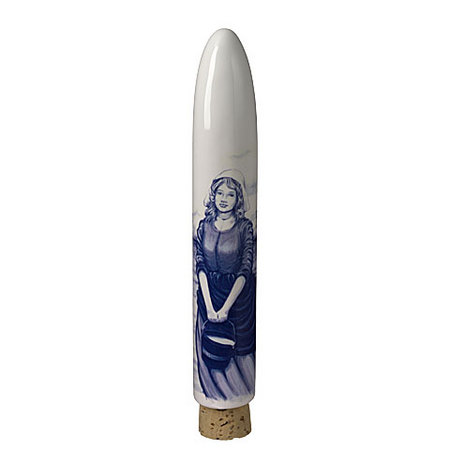
OMG, It's an Heirloom: Dutch Delight dildo - Frank @ OMG Blog
That is, with a bullet, the coolest thing I've seen all day.
A Three-Eyed Smile
UK Police Seize Amateur Photographer's Film - Mark Frauenfelder @ BoingBoing
Okay, Frauenfelder's suggestion of a wifi sd to upload photos as soon as they are taken gets me all shivery thinking of Transmetropolitan. If you don't know what that is then google it. I'm not making it that easy for you.
Why I love Top Gear
Hmm, bored, nothing to watch, what should I do? Oh wait! Lookie here. A car drag racing a jet fighter. How nice. Via Gizmodo
Falsehoods and Capitalism in America
Are We Americans Optimists? Or Suckers? - Brian Tamanaha @ Balkinization
Something similar to what Holland details in his report quoted by Tamanaha occurred during the end of the 19th century. By the 1890s it became clear to many of the middle class in countries like France, Germany or wherever there was an entrenched aristocracy, that education and talent mattered less than genetics. The successful ones came from good stock, it was believed, and one can quickly make the jump from thoughts like that to racial eugenics. That was the conclusion of one Georges Sorel, but he focused himself on matters other than pseudo-science. No, instead he went on to a far more noble task of turning Marxism from a theory of economic revolution into one of violent moral revolution. Both Lenin and Mussolini were inspired by this man's chaotic writings on the need to create a moral severance with the bloated and indulgent bourgeoisie and the upstanding laborer.
All of this occurred during the end of the century as the cultural clime of Western Europe began to fill with the idea that people's station in life was not dictated by merit but by a false nobility who lacked the physical and moral strength of the working class. I'm seeing hints of such a belief in today's media and conversations. It's more than a little scary as the last time people got all in a tiff over economic equality while confusing it with moral standing we ended up with fascistic movements of varying success (i.e. Romania's failed fascist takeover versus Germany's quite successful transition to Nazism). I do think the issue of economic inequality needs discussion but that discussion must remain distinctly separate from issues of morality and religion. I just fear that with today's GOP ideology this won't happen.
I hope people will start realizing that pure capitalism exists and functions as well as pure communism. That and the only moral rule of capitalism is you can make as much money as you want so long as you don't prevent anyone else from doing the same.
Zombie vs Zombie
Will Smith's Bummer - Andrew Sullivan
I liked the way the zombies were portrayed in 28 Days Later and 28 Weeks Later since it makes them a little more terrifying that they can move so quickly. But then again, I loved how Max Brooks portrayed the typical zombie in World War Z and how even then they were terrifying creatures. Toying with the characteristics of the zombie I think is almost necessary now that the slow, shuffling zombie has become an icon of horror. It's a matter of keeping the suspense up and the slow zombie versus the fast zombie is losing out in the modern age
Mobility isn't so easy
US Spends more on mobiles than land lines - L'Inq
I don't find this report surprising since I have never had a land line attached to me personally. It's been mobile all the way for me. But I do wonder what consequences this will have for corporations who rely on telemarketing and bill collections. When you separate the phone from the physical location doesn't that start to present a problem for those looking to collect on a late credit card payment?
The Transformation of the Punk

I never read the original Tank Girl. My interests in comics during that period were primarily in the X-Men realm. But she did catch my eye every once in a while and for a long time that was what a real punk was supposed to look like for me. Now, in the age of the cyberpunk, the visual expression is less important than the subverting presence of a punk mindset. Plus, I adore Ashley Wood's art, when I can figure out what the hell he's doing. Just a weird mix of nostalgia and the modern for the morning.
Sunday, December 16, 2007
Vibrant

Mother is the necessity of invention as artist Jen Stark shows here. The medium is simple construction paper used in a unique new way as a base for sculpture.
Muhammad was a Punk Rocker
Muhammad Rocked the Casbah - Lydia Crafts @ Texas Monthly via Andrew Sullivan - Muslim Punk Rock
Photo Credit - Kim Badawi
This is probably the coolest thing I've heard about in politics and music in a long time. Texas is the reason though. For cities like San Antonio, Austin, Dallas and Houston, the mixed cultural identities slammed up against bastions of certain cultural identities tend to produce the desire for resistance. And, to stereotype Texas a little, there's an independent streak in all Texans. We go our own way because that's the way we decided to go. So the fact that a kid in San Antonio took Islam punk isn't surprising. But it is very cool, both for the Texas music scene and for the ideological struggles between the West and Islam and within Islam itself over modernity.
Money Quote: "On tour, the taqwacore bands allowed each other to embrace their contradictions as young Muslim Americans confused about their religion, identity, and place in the world. They prayed together, philosophized about Allah, visited mosques in Harlem and Ohio, shouted their grievances about President Bush, and generally thought for themselves."
I raise a glass for the rise of Islamic punks. These kids are the ones who will change perceptions about Islam, all while producing punk rock music. I think we win all the way around on this.

The Meme of the Link
The Web's Link-Driven Attention Economy - Scott Karp @ Publishing 2.0
The small controversy over Lane Hartwell's removal of all her photography from Flickr is based on the issue of attention and citation. It's easy enough for college and graduate students to understand; whenever you use the work of another author you always cite it. In fact, one of the mantras I remember from graduate school was, "when in doubt, cite it." With the rise of the blog and the online video and picture services the need for a meme that reinforces this idea of citation through link or comment is critical. Yet, I don't think there's much to worry about. Tag-clouds and the tagging culture growing within the Web 2.0 culture contains this meme in a way. A tag is used to help others search for particular items and the usage of tagging and tagging services should help mitigate the effects of those less informed who fail to add a link or credit. Eventually a link should pop up and lead someone to the proper site. Messy it is, but we can't force every person online to link or credit appropriately. All we can do is call them on it and attempt to reinforce the meme that a link or credit is always necessary when you use someone else's work.
A Diamond is Worth as Much as You Pay for It
100% - Matt Yglesias
What Desperation Looks Like - Andrew Sullivan
"If Clinton's going to run on her alleged greater experience, surely it's fair to point to the content of that experience and ask whether or not it's all good experience. " Matt Yglesias
Matt makes a salient point about experience and how the Clinton campaign's harping on it has the potential of blowing up in their faces. The amount of experience someone has is only a good as how that experience has allowed that person to make wise decisions. It's the wisdom gained from experience that makes experience something worth looking at. But when it's obvious that while someone has a great amount of experience but continues to make poor choices then you can tell such a person hasn't gained anything through experience. And that actually makes such 'experience' more worthless, and dangerous, than no experience since you already know the track record is pretty poor.
It's also worth it to point out that Matt's comments on experience came from a recent Charlie Rose interview with former President Clinton, something that Sullivan believed spoke for itself through the YouTube video.