You know, trying to find a direct conversion of millimeters to carat weight is hard to find. Now I'll have to pull the stone out of it's setting. Oh well, it was a little wonky in there in the first place. Just more work for a damned appraisal.
Thursday, July 10, 2008
Wednesday, July 09, 2008
A Day Late But Fuck Your Short Dollars

Now, the new song itself is drastically different than previous efforts (I would say radically if it wasn't for the use of looped bits and electronic noise on a few tracks from their last album). Even so, "Mercury" is a great song and a logical direction for the band's sound coming off A Weekend In The City. The heavy use of key bass, 808 drum beats, quick-cut vocals and symphonic backing along with noise art loops and LCD Soundsystem-style claves and other hand percussion instruments form the core of the track's sound. Layered over these new elements are Matt Tongs complex drumming and Gordon Moakes thunking bass lines. Conspicuously missing is Russell Lissack's distinctive guitar work with the only occasional guitar riff making a subdued appearance. Lead singer Kele Okereke's lyrics speak of smoothness and predictable actions which contrasts with the stop-start structure of the song. The music's chopped-up sound points to the chaotic undercurrent of reality while Kele sings of things that are meant to give that chaos the appearance of a continuous narrative.
The seperation between what "Mercury" has to offer and Bloc Party's previous efforts is comparable to Radiohead's transition from The Bends to Ok Computer. This is not to say that Bloc Party is as innovative as Radiohead, but merely to mark the distance between A Weekend In The City and the sound "Mercury" represents. I doubt mainstream fans of the band will like the new sound but personally I love it. I think it's a good direction for the band to take in an era of music defined by the mix of electronica and rock music. More importantly, after two albums so guitar-laden and 90s influenced, the band needs some new tricks to avoid producing a stale rehash of their previous albums. Bloc Party had a distinctive sound when they first came on the scene and if "Mercury" is an indication they will continue to strive for distinctiveness. If the new album is truly their 'experimental' album then it's the right step for a band that avoided a serious sophmore slump with their second album. They have some room to play around now and are willing to take the risk of losing some older fans for the sake of uniqueness. It's a great track and I hope it earns some good critical reviews.

Monday, July 07, 2008
A Correction: History Gone Wrong
In commenting on a Coilhouse post on men's fashion taking on a more dandy look, I defined the time period as the Victorian Age. Naturally, my PhD in Victorian Literature-holding sister had to correct me on this. So without further ado her is her explanation for where I went wrong:
Jordan,Uh, Brummell isn't a Victorian, technically speaking. Brummell belongs to the Georgian period when morals were loser and a multitude of undesirable behavior was buried underneath the properly tied cravat. Read Jane Austen for an idea of Brummell's time. And no, Jane Austen isn't as straightlaced as you might think. In fact, she deals quite a bit with the rake figure Brummell so embodied if not the ton that he inhabited. (The elite classes in the Georgian period actually named themselves the ton or the world. Silly elites.) At any rate, for a good overview, read Linda Colley's Britons, the new biography on Brummell I have floating around, and Ellen Moer's book on the dandy. The reason the age distinction is important is because the advance in men's fashion heralded by Brummell happened at a gallop. It didn't evolve overly much afterwards, except to move from breeches to actual trousers. Women's fashion, on the other hand, changed rapidly, not quite catching up to the simplicity of the Brummell revolution until the Edwardian age and the 1920s/30s sport look.
Modern Music is Rubbish
At the moment I'm listening to a cover of Feist's 1234 by a little electro-duo called Bikini. Their back catalog consists of one 7" single with the A side being the previously mentioned cover and an original song of their own as the B side. This was released perhaps a month or two ago before hitting the interweb music blogs big, making it all the way onto elbo.ws top ten hot tracks. These days when I'm looking for new music elbo.ws is one of my first stops as it's a music blog aggregator. Finding complete mp3s of a song is essential to discovering new acts and determining whether to invest your time and, sometimes, your money in. This is the way modern music is disseminated to the discerning masses.
Before I went to sleep the night before, Miss Information at fotophonic emailed me a snippet of an interview with Doug Marscht of Built to Spill. The interview, conducted by Michael Saba at Paste Magazine is rather short; just a brief catching up with the band and asking Marscht about the Perfect From Now On tour and the upcoming album of theirs. On the whole, the article isn't all that interesting except for that one snippet Miss Info sent me. The question is standard when interviewing such a seminal figure as Marscht who had such a defining influence on music during the 90s and on into the early 00s.
Paste: What’s your take on modern alternative rock, especially because you’ve said before on numerous occasions that you’re not too hot on a lot of it? Is there anything you’ve heard or seen recently that you’re impressed by, or do you just tend to ignore newer music?I'm of two minds about Marscht's view on modern music. On the one hand, I can understand Marscht's position as he's been recording and playing shows since his Farm Days and Treepeople days going all the way back to the early 1980s. When you have played for that long with so many bands (Built to Spill being the primary band of Marscht's) it's hard to say that you find modern, or rather, contemporary music influential in any significant way. So Marscht's position is eminently justifiable; and at this point I would find it a shame if Marscht were to alter his style to reflect modern music. He has settled on a kind of sound that would suffer greatly if influenced by modern music. Marscht has developed his sound over the years, but to suit the sounds in his head more than the sounds of other bands.
Martsch: I mostly just tend to ignore it. Not at all because there’s not good things going on, I don’t know why, I’m just not interested. You know, I’ve answered this question several times, and sometimes I’ll say the same thing, sometimes I’ll make shit up. Not on purpose, but just trying to understand it myself. I think what makes the most sense to me is that part of music is learning about the world, and learning about things, the same way that movies and books and TV and things like that help people learn about the world. When you’re young, you’re a sponge, and you can listen to things and learn a lot about the world. And I feel, myself, that there’s not a whole lot I can learn from some 25-year-old from America. Or the things that I could learn would be pop-cultural. But at the same time, you know, like the Arcade Fire– I thought that first record of theirs was really great. I didn’t learn anything, but it was great music. I never consciously, when I was young, thought I was learning things from music. As I got older, I guess I thought that might be the reason.
On the other hand, I find Marscht's seeming disdain for modern music disconcerting. It's not so much that Marscht has rejected modern music but his opinion of it as something he can't learn anything from is a touch myopic. Music is pop cultural, as much as any book, movie, blog or TV show is. You can't completely isolate yourself from the world of representation as it is a continuous process that, by merely existing and observing, participate in. New additions to our cultural milieu naturally alter our perceptions of the world-even if only in minor ways. It's a cycle that you continually add to whether artist or not.
Theory aside however, I think Marscht is still missing the point about the question Saba asked. It's not so much asking Marscht if he will alter his sound to reflect modern music but if modern music has an effect on how he perceives his music and production values. This last point is key to the change in modern music and something that Marscht himself points to as an asset in his latest recordings. The use of modern technology to improve the way a new song is produced is as much learning from modern music as altering the style of music you play. Production values have long been a keystone for music since the 60s when recording went from 4-track to 8-track and beyond. Moreover, the rise of rap as the predominate form of music on the radio has led to a change in how bass and drums are featured on any particular track. Rock music from even a decade ago doesn't pay as much attention to those elements as they do now.
Finally, the music styles of today pull as much from the past as they do from outside genres. The melding of electronica with modern rock styles has reshaped song structures, instrumentation and the range of styles a single band can play without appearing to rip off another band. I'll give you that a lot of the music is derivative; either directly from the 60s and 70s or from popular contemporary acts. Despite that, many other bands have begun to take their influences and incorporate them into a sound the band finds pleasing without wearing their influences on their sleeves. Bloc Party is an excellent example of a band that has drawn on song structures found in music from the late 70s and early 80s like Gang of Four, Joy Division, and The Smiths while using instrument styles found in the music of 90s bands like Smashing Pumpkins, Radiohead and Blur.
Beyond such highly popular acts as Bloc Party are the garage punk and disco punk bands who appeared on the scene in the early 00s. While they were not the first to take on disco and garage music since the 60s and 70s, the pop sensibilities of some bands like The Strokes, Black Rebel Motorcycle Club and The White Stripes brought them to mainstream attention. That popularity, while quickly disappearing from the mainstream, was continue on Interwibble and its ever-growing collection of music blogs dedicated to hunting down the next great band. Liars, LCD Soundsystem, The Klaxons and several other bands interested in the use of electronic elements in their music were quickly snatched up by the music blogs and spread far and wide. Moreover, the technological advances of more powerful home computers along with recording and production applications on par with those found in expensive studios have allowed bands (a term becoming more loosely applied as the need for the traditional four-person set up has fallen by the wayside) to record and craft their music at home and release the digital recording to the swarms of music blogs. Even the technology available for live music has advanced to such a degree that two-person acts like The Dodos, Fuck Buttons and The Kills are able to play without needing touring musicians.
All of this goes to say that Marscht's opinion that modern music has become more about image than music is an axiom and almost hypocritical. Mainstream music has always focused more on image than music. And the big but non-commerical acts like Bloc Party and Interpol put on shows where the audience is there more out of maintaing their image than to listen to the music. Their still is a group of people who attend shows out of a real desire to listen to the band without concern whether the hip people will show up or not. The Interweb has allowed those true listeners to know when and where to see the bands that speak to them. And those people will learn something about how modern music is played and the potential directions it can take. While I don't think Marscht should suddenly start playing tight riffs backed by a disco beat, I think his opinions on modern music reflect the attitude of someone who doesn't want to learn anything from modern music. And that's fine, especially since Built to Spill continues to put out quality music. But it still is a limited view of things and one that can have a negative impact on those influenced by Marscht and Built to Spill.
Sunday, July 06, 2008
Supercar Goodness Turbocharged

Had I heard an auto-maker like Chevy or Ford were attempting to add turbochargers to their engines I would scoff at the idea. While they do take pride in their high-end cars, producing a proper turbocharger requires some serious design changes and the use of special components either cast to higher strengths or high-quality hoses. When I originally looked at the Audi A4 I easily made the decision to go with the smaller 1.8l engine versus the larger 3.0l. For one, the 1.8l was turbocharged and for another, the weight of the engine, turbo and all, was much lighter than an engine nearly twice the size. The advantage of a turbocharger is rather simple to understand. Only under hard acceleration does the turbo kick in and then only when you reach a high enough rpm. In other words, a turbo does not constantly run, and even under acceleration, does not always run. So you gain in fuel economy while keeping a reserve of power when needed.
If Ferrari is serious about adding a turbocharger to one of their engine models then they will do it right. The parts will all come highly strengthened but done so with minimal weight. The air flow from the turbo to the engine will have as few restrictions as possible as will the air flow into the turbo itself. Yes, when the turbo kicks in, the onboard computer must increase the fuel flow lest the engine run too lean. But the proper calibration of injectors, airflow and computer will minimize the increase in fuel consumption during the forced induction of the turbocharger.
For those of us with lower end cars like the A4 we have to make do with the turbo as is or do some serious modifications to enhance the total airflow of the engine. Of course, by improving the airflow we gain in fuel economy while enhancing overall performance. Unfortunately, we don't get the smoothness of a six cylinder engine (V6's tend to run the smoothest due to the way the cylinders are timed with two down, two up and two in the middle). Still, the smaller engine does help a lot with fuel economy while leaving room for improvement.
This news does support a claim of mine I made against Matt Yglesias and his de facto support of limiting horsepower. If an auto-maker like Ferrari is considering using smaller turbocharged engines to maintain their high horsepower then it goes to show that revamping an engine design to take advantage of forced induction while making the engine smaller is another route auto-makers can take to keep their horsepower other than artificial limits on horsepower. It also shows the power of the market as Ferrari is reacting to the high cost of fuel by looking at more efficient engine designs.
The Perils of the Audiodive
Coming out of audiodive. Ears should return to normal by morning. So much good stuff to throw out there. Head's too wrapped up and stuffed with cotton to sort it out for posting tonight. At least I was able to spend an ungodly amount of money on my car today.
Saturday, July 05, 2008
Reality Torpedoes - Updated
The Difference - Matt Yglesias
I didn't want to read another Charles Krauthammer op-ed on Sen. Obama's supposed cynicism, I really didn't. I feel quite cheated afterwards, as I've said before. And the fact that Krauthammer is shocked, shocked I tell you, at a politician repositioning themselves for an election is depressingly hilarious. John Scalzi gets it. I get it. Obviously Yglesias gets it. Why can't Krauthammer get it? Is it because Sen. Obama is black or because Sen. Obama is a Democrat? Or is it because Sen. Obama does not dogmatically follow an agenda, damn the reality torpedoes. These attempts to hang the sign of 'flipflopper' on Sen. Obama don't really work when throwing everything at him at once. You end up with a confused, contradictory attack. Krauthammer wants a continued presence in Iraq so shouldn't he hail Sen. Obama's flipflopping?
Update:
It seems Andrew Sullivan has joined the growing chorus of people tired of Krauthammer's meanderings on Sen. Obama's shifts since he became the presumptive Democratic nominee. It isn't hard to get both that Sen. Obama is a politician and a change in tactics is not a change in strategy.
The Firebadger is set to Stun
Firefox grabs bigger slice of browser pie - Egan Orion @ L'Inq
I've used Firefox for years now; since it's days in pre 1.0 release. The slow conversion of the rest of my family was successful. And I tout the benefits of Firefox whenever I can. It's simply the better browser at the moment. More to the point, the decline of IE users means websites (at least the good ones) have started using open standards in the coding of their sites. Even though I still use WindowsXP for my OS, I try to use as many open source apps as I can find. Not because I believe in the big bad of Microsoft anymore, but because keeping the code open for people to review and change at will means bugs and security problems tend to get fixed much faster than in closed source systems. Now if only game makers would recognize the need to make their games portable to Linux then I wouldn't have a need for Windows at all.
Friday, July 04, 2008
Can't Find a Better Man
Ex-Senator Jesse Helms dies at 86 - BBC News
I would say something kind about Sen. Helms and how his death represents an end of an era, but considering a better man got shot this week and lived, I'll just say I hope Helms burns in hell for a good while.
And yes, I know I used Pearl Jam for the post title. Just remember, I'll stab you if you give me shit about it.
Thursday, July 03, 2008
A Gentleman's Attire

I suppose the most accurate comparison to the dandy of the Victorian Age is the metrosexual of ours. Fashionable men dressed in elegant clothing with the occasional excess is the most common form seen. What Brummell did was take that excess to an extreme for the dandy. Lev's article points to a contemporary example of such excess of the dandy form complete with serious corset usage and high collars. It's not my taste really, but I do love seeing this kind of brilliance in men's fashion make a return. I doubt you'll see many men actually dressed like this, in the same way that you won't see many of the original dressed designed for runway models worn by everyday women. Even so, the derivatives are what's important. Elements of the dandy will find their way into men's fashion over a period of time with certain looks becoming the standard. I don't think people appreciate what a true gentleman has to do in order to maintain a well-groomed appearance without looking over the top.
Courtesy of Fritz Lang

No wonder my copy of Metropolis made no sense. I thought it was just a quirk of the movie. Plus, I was too lazy to do any research on it. But now this means I get to buy a brand new edition with all the extra greatness. Tis a good day.
I'll Spit Live Rounds That'll Penetrate a Fast Nigga
Brian Beutler - Matt Yglesias
Bullets Can't Stop Me From Cracking Wise - Adele M. Stan
Brian - Ezra Klein
Crime Doesn't Pay - Megan McArdle
So apparently you haven't made it in D.C. progressive blogger circles until you've gotten shot. Fortunately, Mr. Beutler will make a full recovery as they say; i.e. live. At least this wasn't like Tupac, because somehow we'd see his writing increase. Best of wishes and all that. Oh, and Adrienne, what was that about how great D.C. is to live in?
Damn Your Eyes!
One last thing before I curl up with my signed copy of Heads in the Sand and my happy little Klonopin pill: if you haven't been reading my friend's blog The Dredge Report then I'm afraid I'll have to cut your Achilles tendons.
Wednesday, July 02, 2008
Running Up The Score Is Soooo Unfair
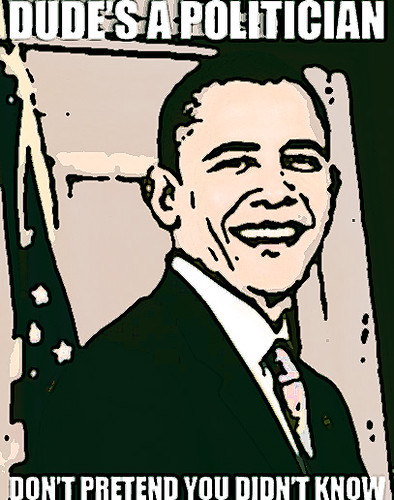
I have to say, Scalzi makes some great points here, but the fifth and last one is the strongest rebuttal to the far left's disdain for Sen. Obama's current centrism. I just have to directly quote Scalzi because anything less would do an injustice to Scalzi's words:
Obama’s probably also aware that he’s got the left in the tank. Some folks on the left were goofy enough in 2000 to think that voting for, say, Nader, wouldn’t make a huge difference in the end, so why not make a cute little protest vote. Here in 2008, anyone on the left who isn’t planning to pull a lever for Obama probably has congenital brain damage.Scalzi is absolutely correct on this point. Sen. Obama is a politician and apparently knows both strategic planning and tactical maneuvering (unlike, say, President Bush). So while he does make some of the best, most inspiring political speeches of this generation, he also knows that politics is a game where bitchslapping your opponent early and often works. Taking positions on issues that appeal to a wider range of voters, tacitly supporting legislation that's unlikely to pass and appearing to cater to the expected base of your opponent when you have the chance is smart politics. No, it's not the Politics of Sen. Obama's speeches, but it is the politics that he has to engage in. Had he not, Sen. Obama wouldn't exist; not even State Sen. Obama. So, politely to the left, suck it up.
That's Right! That's Right! Oh, That Ain't Right.
And It Wouldn't Be The First Time, Either - John Scalzi @ Whatever
I get to experience the weird duality of a cat on your chest. Most nights now usually end with the last light turned out, me sliding down in the covers and my cat, Marie, hoping up on my chest to nuzzle my face. Of course, for every five units of adorable nuzzling is one unit of cat ass in the face. Why? I really don't know but remain deeply disturbed by it. Sometimes I've woken up to such nuzzling, but I fear for the morning I wake up to cat ass.
Existence as Stress
Severe Shyness? New Study Shows That Anxiety Is Likely A Long-Lasting Trait - Science Daily
Son...of...a...bitch. I hate my genes and would like to stab every strand of my DNA in the eye.
A Case of the Vapors

I'll believe it when I see it; otherwise it's just vaporware.
Fraternity Hazing
Christopher Hitchens waterboards himself - Cory Doctorow @ BoingBoing
Well it's nice to know that there's at least one political pundit willing to put his money where his mouth is.
Horsepower = ?
Horsepower Controls - Matt Yglesias
Being something of a gearhead I've taken a long look at things like horsepower and torque while wondering how the changes I make to my car will affect my fuel economy. Then again, I have a relatively small 1.8l turbocharged engine that in stock form had an average fuel economy of 22/28 city to highway mileage on 170hp. After replacing the air intake with a cold air intake I ended up with around 180hp but a fuel economy of 25/30. This is one area where horsepower was not the point but increasing the amount of cold air entering the engine was as it dramatically improved the running of the car without making it smaller or limiting the horsepower.
Focusing purely on horsepower is fairly ridiculous if you wanted to make an argument for more efficient cars. The argument you want to make instead is to point out all of the inefficiencies that exist in stock configurations. The tuning crowd is just as obsessed about weight reduction as they are about increased horsepower. Open your hood sometime and mind the effort it takes to lift the hood even with the help of a hydraulic piston.
A more fuel efficient car comes not just from limiting horsepower but from making the car as light as possible without losing the necessary structural rigidity. Carbon fiber hoods, lightened alloy wheels, lightweight aluminum flywheels, carbon fiber drive shafts, and metal sections cut up like swiss cheese are all common things on a tuner's vehicle. It's basic physics--the lighter the car, the less energy you need to get the car moving. Shedding twenty pounds here and fifteen there seems like ridiculous obsessiveness but when the pounds add up to the weight of an average-sized person then you realize how important weight reduction is in improving the efficiency of a car.
The reason why average horsepower has gone up in the last thirty years is not solely because of American desires for speed but because the amount of power it takes to move a three or four ton SUV around. Horsepower does not directly translate into speed. The three-ton pick-up truck that passes you on the highway may have a big V-8 with 300hp but anything less and you would have a vehicle that struggles to maintain highway speeds. Meanwhile, the little Mini Cooper that zips past you has a tiny engine but it doesn't need anything more to produce that kind of speed.
The point is Yglesias is wrong to assume that limiting horsepower alone would bring about some sudden leap in fuel economy. Certainly a smaller engine would do that but put a small engine in a heavy car and you will still have terrible gas mileage. What Yglesias should really argue for is a complete rethink in car design with an emphasis on improving the efficiency of the engine while making the car as light as comfortably possible. This means using more expensive parts and removing restrictions in the air flow into the engine. Oh, and there's one more way to lighten a car that few people think of--go on a diet. Losing twenty pounds on yourself can have the same effect as losing twenty pounds on the car. That engine has to lug your ass around so why not ease it's burden?
Ending Cute Naiveté
There's a young lady whose father has been a customer of ours for some years now. She apparently has taken several courses in jewelry design and such, and now it seems that her dad would like to see some payoff of the money spent on said courses. She's coming to my dad's workshop at home to spend some time casting and making molds--general parts of jewelry design naturally. I, on the other hand, want her to come work at the store for a couple of days a week. The reason is simple; I want her to understand what conditions jewelry is placed under in everyday circumstances. More to the point, I want her to know the stresses certain metals and stones can take before breaking and then what to do to repair the items. I want her to know what frosting a diamond is like, what happens when you heat an opal too much and what a diamond magnet does (key tip here, diamond magnets don't exist). She needs to know these things if she is going to go off and become some great name in jewelry design because she becomes responsible for the piece from the time she makes it to the time it comes back with a broken prong, a missing stone or a cracked shank. It's time for her to have a jewelry drill sergeant and my grandfather and I are perfect for the job. We don't half-ass our way through a custom piece or a simple repair. And that's what I want to teach her.
Subscribe to:
Posts (Atom)